
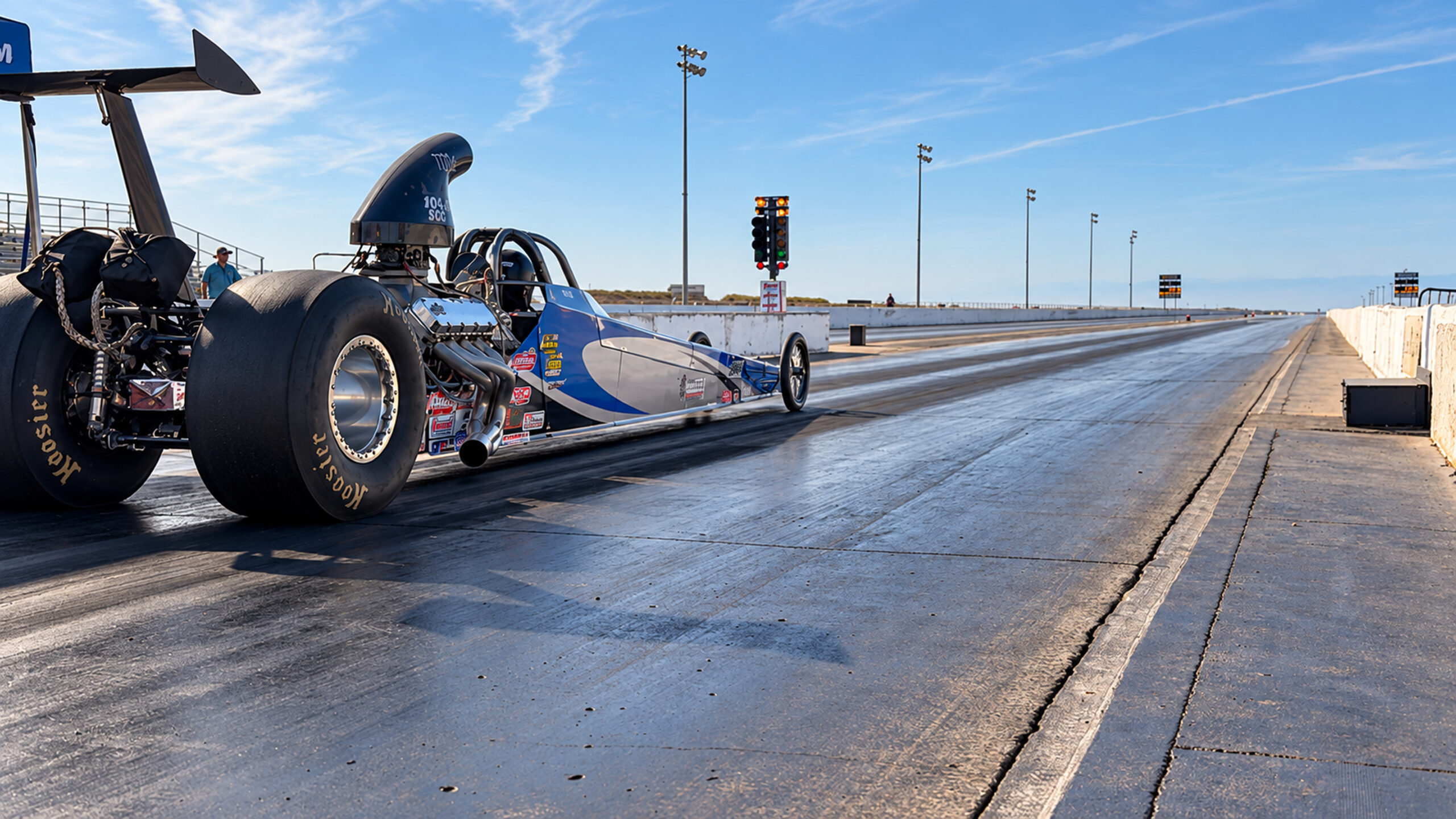
A pair of dragsters launches, one seems to slow briefly, and the cars reach the finish almost together. Then the win light comes on beside a car that did not run the quickest elapsed time. Welcome to Super Comp.
Jason Wieck Racing competes in this NHRA sportsman category from its home base in Long Beach, California. Knowing a few basics makes the action easier to follow—and reveals how much can happen in a fraction of a second.
What does the index mean?
Super Comp normally uses an 8.90-second quarter-mile index. Think of it as the class’s elapsed-time benchmark. The aim is to reach the finish ahead of the other racer while staying within the applicable rules, including the breakout rule. Running quicker than the index can cost the round.
The class is primarily made up of dragsters. Many are capable of going considerably quicker than the index, so producing the quickest possible pass is not the only challenge. Consistency and execution matter. Always use the posted event index when following a race rather than assuming every event uses the same number.
The start: a four-tenths Pro Tree
Super Comp uses a Pro Tree. Its three amber bulbs illuminate together, followed by green four-tenths of a second later. Both lanes receive a heads-up start.
Reaction time measures the vehicle’s departure from the staging beam relative to green. A .000 reaction is perfect; a negative reaction time indicates an early departure, or red light. The reaction time is separate from the elapsed time shown for the run.
Why the quickest elapsed time may lose
Elapsed time measures the run after the car leaves the starting beam. A racer who leaves later can record a quicker elapsed time yet reach the finish second. This is why it helps to read the reaction-time and elapsed-time columns together.
For a simplified example with both racers legally above an 8.90 index and no other infractions:
| Racer | Reaction time | Elapsed time | Combined time |
|---|---|---|---|
| A | .010 | 8.920 | 8.930 |
| B | .040 | 8.910 | 8.950 |
Racer A reaches the finish .020 second earlier despite the slower elapsed time. These are illustrative numbers, not an actual JWR run.
What is a breakout?
A breakout happens when a racer runs below the applicable index. If both racers break out, the one who goes under by less generally wins, assuming no other deciding infraction. A red light takes precedence over an ordinary breakout. Official rules govern more complicated situations.
Why does a dragster seem to slow after launching?
Super Comp cars commonly use timers and throttle stops to manage performance toward the index. That can produce a run that sounds or looks different from an all-out pass. This describes the class generally; it does not identify JWR’s current equipment or settings.
What to watch next time
Watch the start, then the finish, then the scoreboard. Compare reaction times, check each elapsed time against the posted index, and look for the win light. The numbers tell a much richer story together.
Meet Jason, read the team’s race coverage, or explore JWR partnership opportunities.
Learn more from NHRA
This is a general fan introduction. Official NHRA rules and the posted event index govern competition.
← Back to News